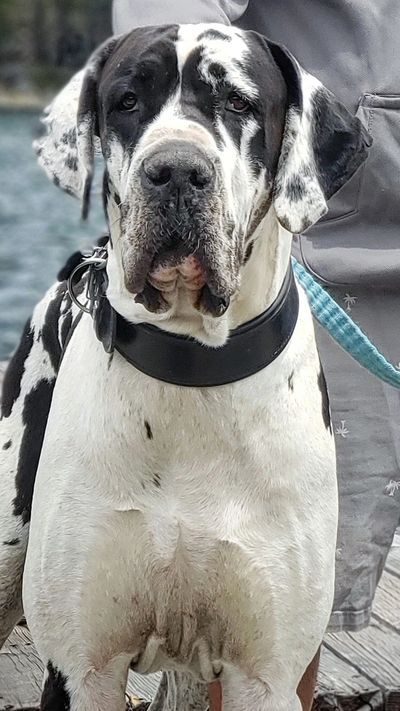
Euro Danes vs American Danes
Great Danes: The "Original" Standard vs. The American Evolution
If you’ve ever stood next to an Apollo of Dogs, you know that the Great Dane is less of a pet and more of a lifestyle choice. But within the breed, a friendly (yet fierce) debate has been brewing for decades: The European (Original) Standard vs. The American Standard.
While both versions share the same gentle soul, the physical differences are striking. If you’re a purist looking for the powerhouse presence that defined the breed’s history, the European Dane remains the gold standard.
The Anatomy of Greatness: A Quick Comparison
To understand why many enthusiasts prefer the European lineage, we have to look at the "blueprint" of the dog.
Features:
European Dane- Bone Structure Heavy, thick, and robust.
American Dane- Lighter, refined, and elegant.
Head Shape:
European Dane- Deep muzzle, pronounced "stop," and larger flews (jowls).
American Dane- Sleek, wedge-shaped, and more "clean-cut."
Chest & Body:
European Dane- Deep, broad chest with a powerful "substance."
American Dane- Tucked waist with a Greyhound-like silhouette.
Temperament:
European Dane- Often described as more laid-back or "mastiff-like."
American Dane- High-energy and incredibly agile.
Why the European Standard holds the Crown
There is a specific gravity to the European Dane that feels authentic to the breed's origins as a hunter of wild boar. Here is why the "Original" standard continues to win hearts:
Substance Over Style: The American standard has leaned heavily into the "show ring" aesthetic—aiming for a dog that looks like a statue. The European standard prioritizes substance. When you look at a European Dane, you see the power required to hold down large game. They aren't just tall; they are substantial.
The Iconic "Blocky" Head: Many owners find the European head more expressive. The deeper muzzle and more pronounced features give them a regal, ancient look that the sleeker American lines sometimes lose.
A "Mellow" Majesty: While every dog is an individual, European lines are frequently bred for a temperament that leans more toward the "Gentle Giant" side of the spectrum. They tend to have a lower drive, making them the ultimate couch companions for those who want a massive presence without the frantic energy.
The Preservation of a Legacy
Choosing a European Great Dane isn't just about preferring a "thicker" dog; it’s about preserving the heritage of a breed that was meant to be a bridge between a hound and a mastiff. In the pursuit of elegance, the American standard has drifted toward a more delicate frame. For those who believe a Great Dane should command a room with its sheer physical mass and bone density, the European standard is the only true choice.